



Your Radio Website Is Leaking Listeners
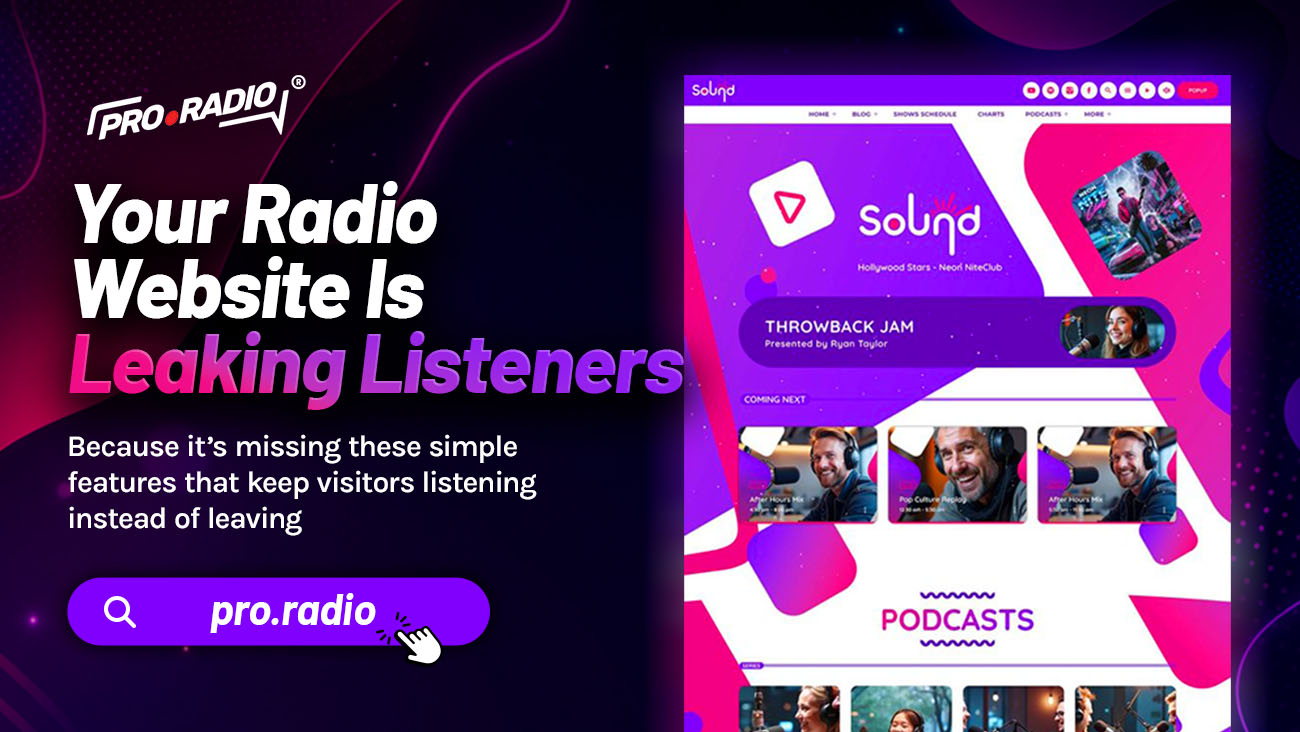
Because it’s missing these simple features that keep visitors listening instead of leaving. You may not see them go. You only see the numbers slowly fail to grow, the average session time stuck at twenty seconds, and the same handful of loyal fans showing up week after week. Meanwhile, the music is good, the shows are real, the team puts in the hours. So what is leaking?
In most cases, it is not the audio. It is the website around it.
The Quiet Way Radio Websites Lose People
A listener types your station name. They land on your homepage. They want one thing: to press play and hear what is on right now. If they have to scroll, search, squint at a tiny play button, or wait for the page to finish loading, you have a small window before they bounce to another tab.
Most radio websites lose listeners in the first ten seconds, and the reason is almost always the same. There is no clear play button. There is no live show information. The mobile version feels broken. The page jumps around. The stream cuts out when the visitor clicks to another page. Each of these is a small leak. Together, they drain your audience.
The frustrating part is that none of these problems are about your content. They are about the structure your content sits inside.
The Non-Stop Player That Doesn’t Quit
The most visible leak on a typical radio site is the player itself. Visitors press play, start listening, then click on a show page or the blog. The stream stops. They lose the moment. They close the tab.
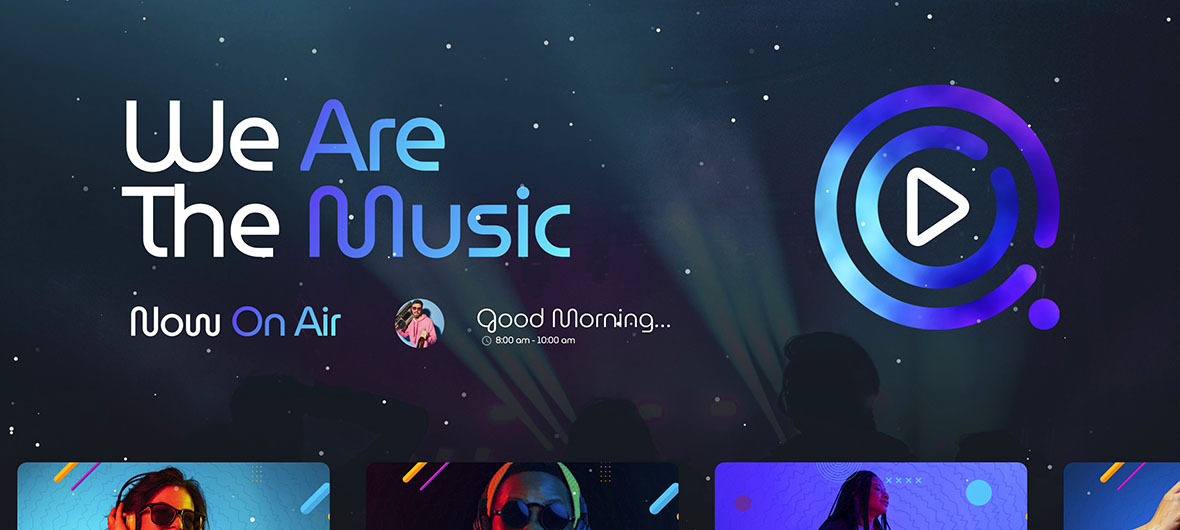
Pro Radio fixes this with a non-stop player that keeps the audio alive across the site. As people move from the homepage to a show page to a podcast archive, the music keeps playing. That single behavior changes everything about how listeners use your website. Instead of a page they visit once, it becomes a place they actually browse while listening.
The player supports Shoutcast, Icecast, Radio.co, Airtime Pro, Airtime, Live365, Radionomy, RadioKing, Azuracast, and plain mp3 or aac streams. It reads ICY metadata to show real-time song titles, and it pulls album covers from public archives so the “now playing” area feels alive. You can place play buttons anywhere with Elementor widgets, and the popup player gives mobile visitors a clean, fast way to listen without losing the page they were exploring.
Mobile Listeners Are Where The Real Leak Is
If you check your analytics, a large share of your visitors are on a phone. They are commuting, working out, cooking, or sitting on the couch with the screen close to their face. Their patience is short. Their data plan is finite. Their attention is split with three other apps.
A desktop-first radio site loses these people instantly. They get a tiny play button, a heavy header that takes forever to load, and a stream that drops if they try to lower the bitrate or switch apps.
Pro Radio is built around mobile streaming. The player includes an alternative audio source toggle, so a lighter, lower-bitrate stream can kick in for users on weaker connections. The popup player works comfortably on small screens. Volume and play controls can live in the menu bar, so listeners are never more than one tap from starting or pausing the show. These are not big features individually. Together, they keep mobile visitors from leaving after the first hiccup.
Your Schedule Should Sell The Next Hour
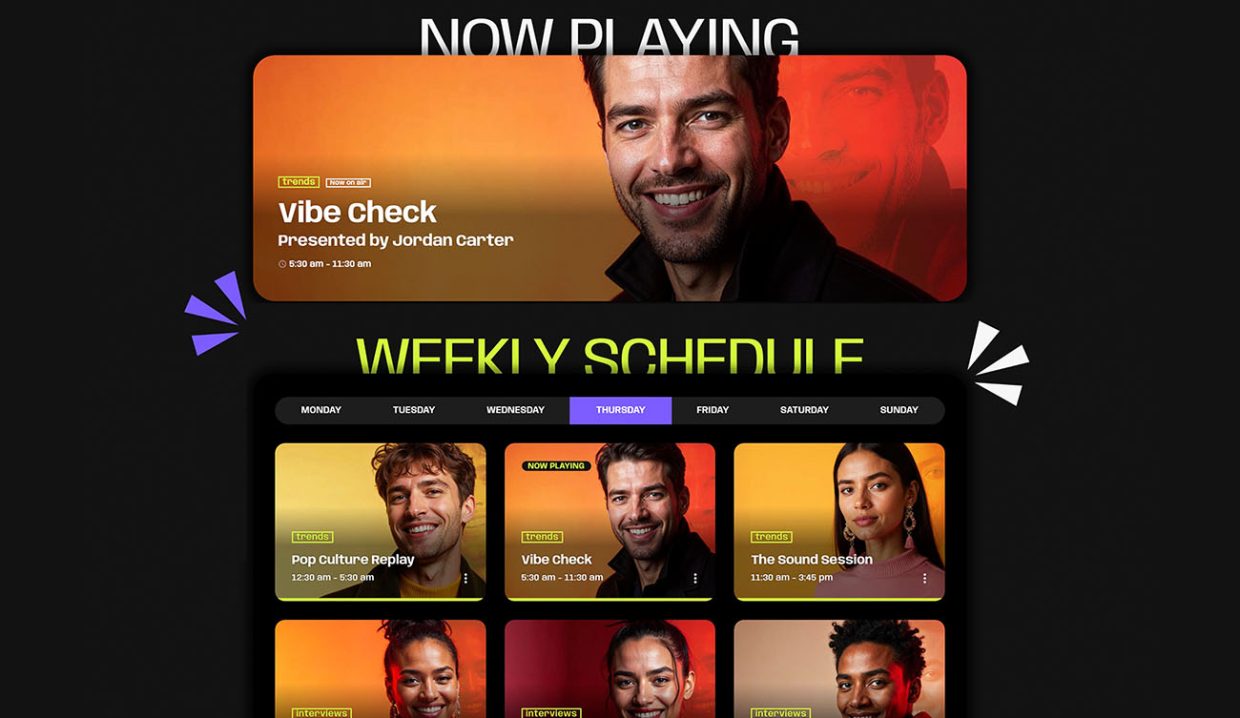
Another silent leak is the schedule. Many stations hide it on a separate page that loads a wall of times. Visitors look once and never return.
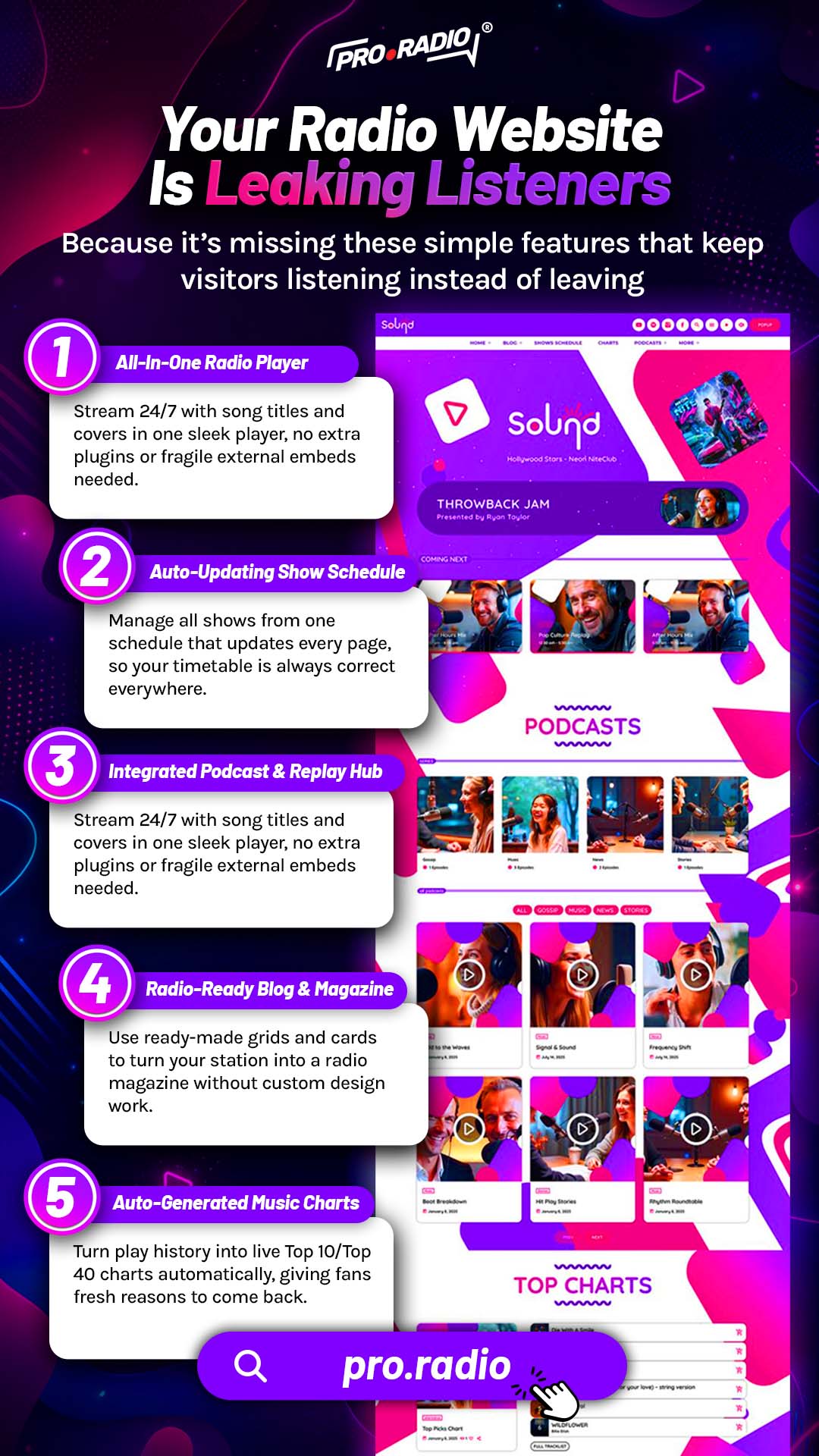
A clear schedule is a tool that pulls people back into the next hour. Pro Radio gives you an interactive weekly schedule with unlimited shows, automatic time and day detection, and a system that highlights the show that is on air right now. The current day is pre-selected, so visitors do not have to search for what is happening today.
You can also display upcoming shows as sliders and carousels on the homepage. A listener who arrived for one show might see that something they love is on in two hours, and stay subscribed in some way: bookmarking the page, following on social, or simply leaving the tab open. That is the opposite of leaking.
There is one more advantage that station managers love: a show only needs to be edited once. If you change the host or update the artwork, every instance of that show across the timetable updates automatically. No more weekly grid maintenance.
Show Pages As Little Listening Hubs
When a listener clicks a show, what do they find? On most radio sites, a paragraph and maybe a photo. Then they close the tab.
Pro Radio turns each show into a self-updating hub. The show page can include the timetable for that program, recent podcast episodes, latest news posts tied to the show, the speakers and DJs who present it, music charts connected to it, and upcoming events. Listeners who arrive curious can fall into thirty minutes of content tied to that one show. DJs can share their own page like a mini-website. Search engines see fresh, related content tied together, which helps with visibility.
You do not have to build any of this manually. You add a show once, and the page assembles itself from the rest of your site.
Why The All-In-One Approach Stops The Leaks
Stations often try to plug these leaks one at a time. A new player plugin here, a schedule plugin there, a podcast widget bolted on, a separate page builder. Each addition introduces new conflicts. Styles clash. Performance drops. The stream breaks again.
Pro Radio handles all of this as one system. The player, the schedule, the shows, the podcasts, the charts, the events, the presenter pages, and the Elementor widgets are built to work together. The Ajax page load is bundled in, so navigation does not interrupt the stream. The minified styles and JavaScript keep things light. The design tools share one customizer with over two hundred options, so colors and typography stay consistent.
When a system is built specifically for radio, you stop worrying about whether the next update will break the player. You stop hiring a developer every time you want to add a show. You stop apologizing to listeners for a slow page. The leaks close.
Stop The Leak, Keep The Audience
If your station has good music, good hosts, and good ideas, you should not be losing listeners because of the structure of your website. Most of the leaks are not big problems. They are small frictions that add up.
A clear play button. A non-stop player. A mobile-ready experience. A live, current schedule. Show pages that pull people deeper. Each of these is a small fix. Together, they turn a leaking website into a place listeners actually stay.
Take a look at Pro Radio and see how a website built around radio behavior, not generic templates, changes the way your station feels online. Your audience is closer than you think. You just need to stop letting them slip away.


You may also like

Copyright 2019-2026 ProRadio® Qantum Themes SL® ESB02979078 All Rights Reserved